EAV Porta Nolana: turning a large urban project into a cinematic story
Coordinating the drawings of several studios and turning them into a unified narrative: the redevelopment of the EAV Porta Nolana station in Naples.
The redevelopment of the EAV station in the Porta Nolana area is a large-scale infrastructure project destined to transform an important part of the city of Naples. The intervention includes the complete restyling of the EAV office tower, the rebuilding of the square in front of the station and the creation of a new green boulevard. The route will pass over the current railway tracks and create a connection with the Napoli Garibaldi area, building a new relationship between infrastructure, public space and urban fabric. We Are Albero collaborated with Corvino + Multari and with the other studios involved in the project, including Proap, taking on the task of coordinating the drawings produced by the different working groups and turning them into a unified visual story.
The challenge: making a complex intervention understandable
A project of this size cannot be told through a simple sequence of images. The transformation involves buildings, public spaces, railway infrastructure, pedestrian routes and new urban connections. To this complexity was added the need to work with materials coming from different studios, each responsible for specific parts of the intervention. The challenge was therefore twofold. On one side, it was necessary to coordinate Revit models, three-dimensional models and complex drawings, making them compatible within the same production process. On the other, a narrative had to be built able to accompany the viewer in understanding the project without weighing it down with an excess of technical information. The result had to be linear, clear and cinematic. Content able to convey the scale of the operation and, at the same time, to show its value for the city.
From technical material to a shared vision
The work started from collecting and organising the drawings of the different participating studios. Models and design information had to be read, verified and brought back to a coherent representation. Coordinating the material meant rebuilding an overall vision of the intervention, overcoming the fragmentation inevitable in a project developed by several working groups. This phase was essential to build the digital model used in the following work. The quality of the final story depended, in fact, on the ability to correctly integrate architecture, landscape, infrastructure and urban context. It wasn't only about showing how the tower, the square or the new boulevard would look. It was necessary to make people understand the way these elements would work together, changing the relationships between the station, the tracks and the surrounding areas.
Knowing the place to tell its transformation
To correctly represent an urban intervention it is necessary to understand the context it fits into. We carried out several site visits in the Porta Nolana area, gathering material useful to reconstruct the real identity of the place. Drone footage made it possible to observe the area from above and read its urban connections, while the ground videos and photographs documented spaces, perspectives and existing conditions. This material was the starting point to integrate the digital project into the real scenario. Reconstructions supported by artificial-intelligence tools contributed to preparing some visual components, later joined to the three-dimensional model. The direction and control of the result stayed central throughout the whole process, to keep coherence between the documented context and the planned transformation. Real footage, three-dimensional animations and the digital model thus became parts of the same story.
Video-insertions, animations and conceptual diagrams
The video was built combining different languages. The 3D animations made it possible to virtually cross the project and show the relationships between its elements. The conceptual diagrams made the fundamental steps of the intervention more readable, while the video-insertions placed the transformation within the existing Naples. The combination of real footage and digital content made it possible to show the project not as an abstract object, but as a concrete transformation set within a recognisable urban context. Every sequence was designed to accompany the understanding of the intervention. The story starts from the place, progressively introduces the planned changes and delivers an overall vision of the new urban configuration. The cinematic rhythm is therefore not a purely aesthetic element. It is the tool through which very different information is ordered and made accessible to those who watch.
Content designed for conferences and presentations
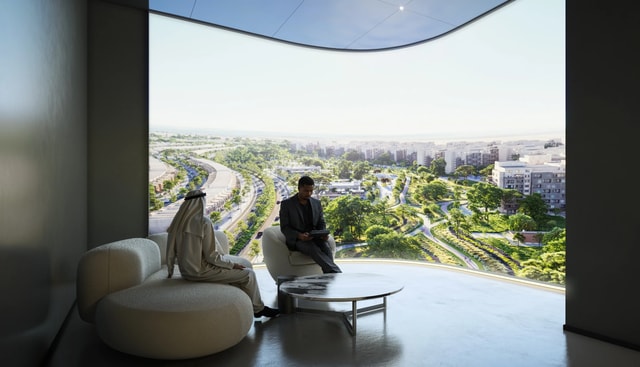
The work, developed over twelve weeks, led to the production of a complete video around five minutes long and a series of renderings dedicated to the project. The content was created to accompany conferences and presentations, contexts in which it is essential to communicate clearly even to an audience that doesn't know the technical drawings in detail. The video makes it possible to present the project through a single narrative sequence, while the renderings offer images able to dwell on the main moments and elements of the intervention. The value of the result lies in the ability to turn a large amount of technical information into a readable, coordinated and memorable vision.
The value of direction in a large-scale project
The case of EAV Porta Nolana shows how telling a complex piece of infrastructure requires skills that go beyond the mere production of renderings. It is necessary to understand the drawings, manage articulated digital models, coordinate contributions coming from different studios and build a hierarchy of information. Only after this work is it possible to turn the project into images and sequences able to truly communicate its scope. For architecture studios and developers, relying on a partner able to manage the entire process means reducing the distance between the technical project and its public presentation. In the work for EAV Porta Nolana, renders and video were not treated as separate outputs. They became the tools of a wider direction, built to tell clearly an intervention destined to change the relationship between infrastructure, landscape and city.